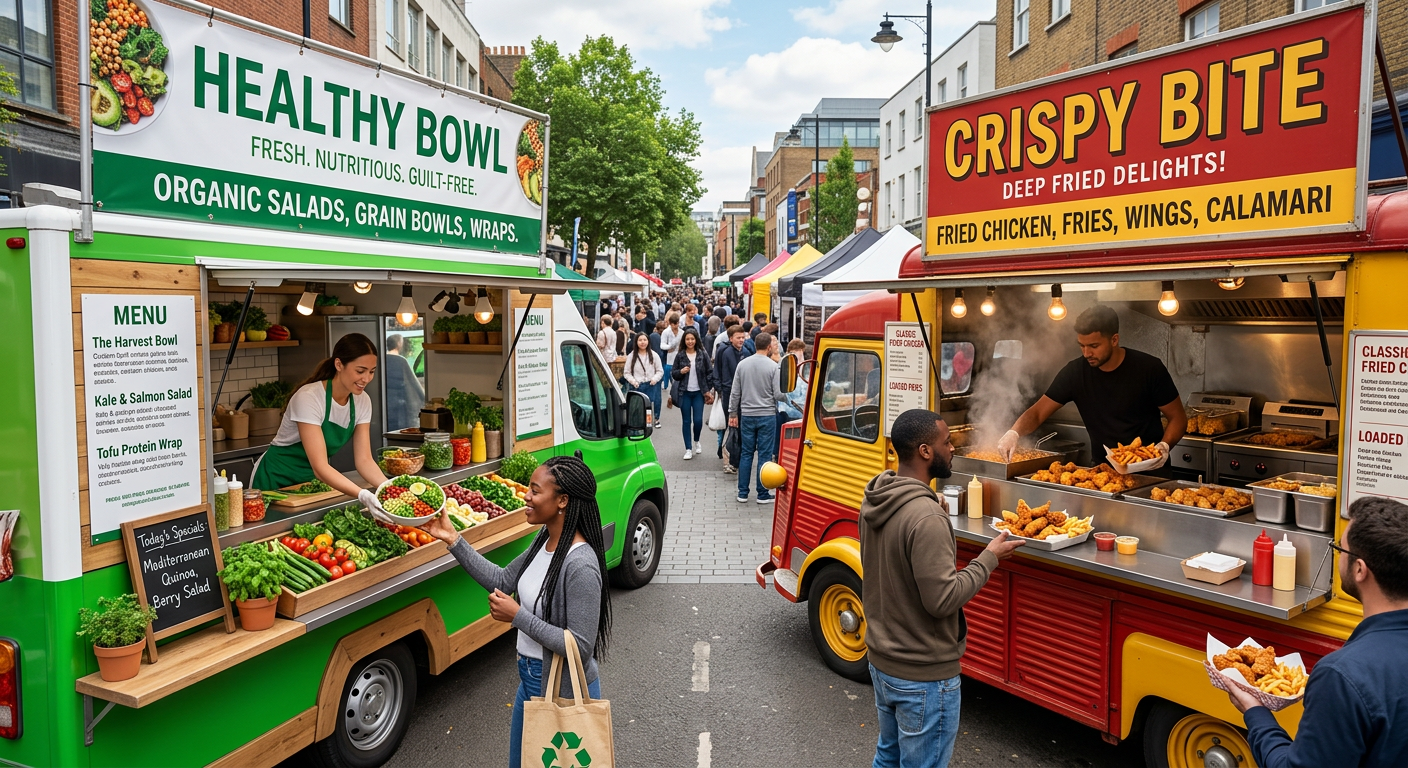

Food trucks have become a staple of modern street dining, offering convenience and bold flavors. However, many popular food truck options—think loaded burgers, fried chicken sandwiches, tacos with creamy sauces, nachos, or oversized wraps—tend to be high in calories, saturated fat, sodium, and refined carbohydrates. In contrast, a well-constructed panini (an Italian-style pressed and grilled sandwich) can offer a more balanced nutritional profile when made with thoughtful ingredients. While not automatically “healthy,” paninis often provide advantages over average food truck meals in calorie density, cooking method, and potential for nutrient inclusion.
Nutritional Comparison: Calories, Fat, and Sodium
Typical food truck meals frequently exceed 800–1,200 calories per serving. Studies of restaurant and street food meals show that full-service and fast-casual options often deliver far more energy than a single eating occasion requires, with many exceeding 1,000 calories. Fried items and large portion sizes drive this. For example, research on frequently ordered restaurant meals found mean energy contents around 1,000–1,300 kcal in several countries, with high variability and frequent excess.
Street food and takeaway purchases in various urban settings commonly deliver substantial fat (often 18–22 g or more per purchase) and sodium (frequently 800–1,500+ mg), with saturated fat making up a large share. Fried potatoes, hamburgers, and savory pastries rank among the higher-fat and higher-sodium options.
By comparison, a standard grilled chicken panini typically ranges from roughly 350–450 calories for a reasonable serving (around 160–200 g), depending on bread, cheese, and fillings. One analysis of a grilled chicken panini (with cheese) listed approximately 378 calories, 12.8 g total fat, 4.7 g saturated fat, and about 784 mg sodium, along with a strong protein content of nearly 35 g. Removing cheese or using leaner fillings lowers these figures further.
The cooking method matters significantly. Deep-frying adds substantial calories and fat through oil absorption—often 100–250 extra calories and 10–15 g of fat compared with grilling the same protein. Grilling or panini-pressing uses minimal added fat while still delivering flavor through Maillard browning. Research comparing grilled versus fried chicken sandwiches consistently shows lower calorie and saturated-fat counts for the grilled versions.
Sodium remains a concern across both categories. Many food truck items (especially those with brined or breaded proteins, cheeses, and sauces) push or exceed half the recommended daily sodium limit (2,300 mg for most adults) in a single meal. Paninis are not immune—bread, cheese, and cured meats contribute salt—but they generally start from a lower baseline when built with fresh or less-processed ingredients.
Protein, Satiety, and Nutrient Density
Paninis can deliver high-quality protein efficiently. A grilled chicken or turkey version often provides 25–35 g of protein, supporting satiety and muscle maintenance. When vegetables (spinach, tomatoes, roasted peppers, arugula) and modest cheese are added, the sandwich also contributes fiber, vitamins, and minerals that many pure fried or sauce-heavy food truck items lack.
Modeling studies on sandwiches show that improving fillings (lean protein + vegetables, less cheese or mayo) meaningfully reduces calories, total fat, saturated fat, and sodium while preserving the convenience of a handheld meal. The bread itself is not the primary issue; the fillings drive the nutritional quality.
In contrast, many classic food truck combinations pair refined starches with high-fat proteins and creamy or fried elements, resulting in lower protein density relative to calories and fewer micronutrients per serving.
The Role of Cooking Methods and Contaminants
Deep-frying is associated with higher formation of certain process contaminants (such as some heterocyclic amines and advanced glycation end-products) compared with lower-fat dry-heat methods like grilling or pressing, though both high-heat techniques can produce compounds of concern if foods are heavily charred. Choosing grilled preparations reduces oil-related oxidation products and overall fat load.
Panini presses typically operate at controlled temperatures with little or no added oil, further limiting fat absorption relative to immersion frying common in many food truck fryers.
Important Caveats
Not every panini is automatically healthier. Versions loaded with multiple cheeses, processed meats, creamy spreads, or oversized bread can approach or exceed the calorie and sodium levels of average food truck fare. Similarly, some food trucks offer grilled, vegetable-forward, or lean-protein options that compare favorably. Portion size and frequency of consumption matter more than any single meal.
The health advantage of a panini is maximized when it features:
- Lean proteins (grilled chicken, turkey, or plant-based alternatives)
- Whole-grain or higher-fiber bread
- Plenty of vegetables
- Limited cheese and minimal creamy sauces
- Moderate portion size
Practical Takeaway
For people seeking a convenient, satisfying meal with a better balance of protein, controlled calories, and lower reliance on deep-frying, a thoughtfully built panini often outperforms many standard food truck offerings. Scientific comparisons of calorie density, fat content, sodium levels, and cooking methods support this edge—provided the sandwich itself is constructed with health in mind rather than maximal indulgence.
As with any food choice, context is key: overall dietary patterns, physical activity, and individual needs determine long-term health outcomes more than any single sandwich or truck meal.
Citations
- Urban, L. E., Weber, J. L., Heyman, M. B., Schichtl, R. L., Verstraete, S., Lowery, N. S., … & Roberts, S. B. (2018). Measured energy content of frequently purchased restaurant meals: multi-country cross sectional study. BMJ, 363, k4864. https://www.bmj.com/content/363/bmj.k4864
- Lanca de Morais, I., et al. (2021). Nutritional Content of Street Food and Takeaway Food Purchased in Urban Bosnia and Herzegovina. Nutrients, 13(11), 3920. https://pmc.ncbi.nlm.nih.gov/articles/PMC8620844/
- BodyPal App. (n.d.). Chicken Panini Calories: 378 per Panini. https://bodypalapp.com/en-us/calories/chicken-panini/
- Biology Insights. (2026). Is a Chicken Sandwich Healthy? Grilled vs. Fried. https://biologyinsights.com/is-a-chicken-sandwich-healthy-grilled-vs-fried/
- Grain Foods Foundation. (2017). Are Sandwiches Healthy? What the Research Says. https://grainfoodsfoundation.org/are-sandwiches-healthy/
- Di Nunzio, M., et al. (2024). Red Meat Heating Processes, Toxic Compounds Production and Nutritional Parameters Changes: What about Risk–Benefit? Foods, 13(3), 456. https://pmc.ncbi.nlm.nih.gov/articles/PMC10855356/