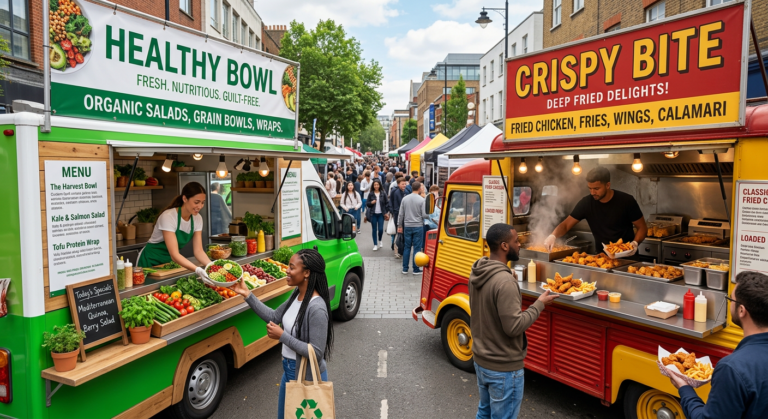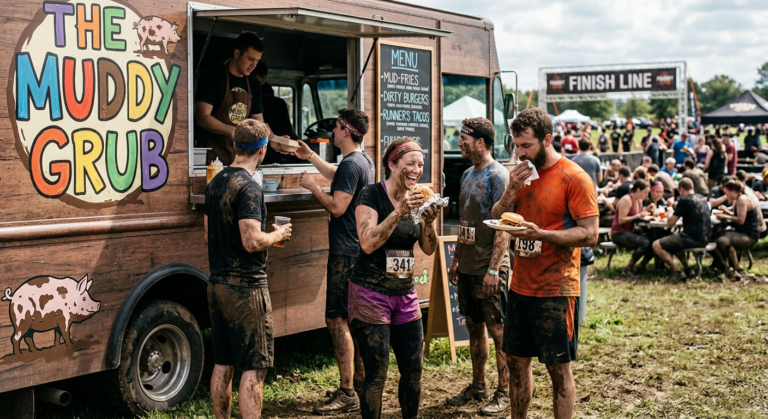

Eating at home is convenient, but it often pairs with prolonged sitting—on the couch, at the table, or in front of a screen. Choosing a food truck instead requires you to step outside, walk to the location (or park and walk), stand in line, and often linger outdoors while waiting or eating. This simple shift introduces incidental physical activity and outdoor time that sedentary home meals typically lack. Research on everyday movement, short activity bouts, and time spent outdoors supports meaningful health advantages from these small changes.
Incidental Activity Adds Up
Incidental physical activity—the movement that happens as a byproduct of daily life rather than structured exercise—includes walking to get food, standing while ordering, or carrying your meal. Large wearable studies show that even short, moderate-to-vigorous bouts of this type of activity are linked to lower risks of major cardiovascular events and premature death. In analyses of people who reported little or no formal exercise, accumulating activity in bouts lasting at least 1–3 minutes (rather than fleeting movements under a minute) was associated with significantly greater benefits. Longer continuous movement within those short windows and higher intensity within the bout further improved outcomes.
Other research on vigorous intermittent lifestyle physical activity (brief bursts such as brisk walking or stair climbing embedded in daily routines) has found that just a few minutes per day can meaningfully reduce risks of cardiovascular disease, certain cancers, and all-cause mortality—especially among less active adults.
Walking to or from a food truck, even for a few minutes, fits this pattern of accessible, unplanned movement.
Breaking Up Sedentary Time
Prolonged sitting is independently linked to higher risks of cardiovascular problems, metabolic issues, and mortality. Interrupting sedentary periods with short walks or light activity improves post-meal blood sugar control, insulin response, and other markers. Studies show that even 2–15 minutes of walking after eating can help blunt blood-glucose spikes, support digestion, and provide benefits that persist for hours.
Going out for a food truck meal naturally inserts movement before and often after eating, in contrast to remaining seated at home for the entire meal experience. Replacing even one hour of sitting with everyday non-exercise activity has been associated with lower mortality risk in less-active adults.
Outdoor Time Encourages More Movement
Spending time outdoors is itself linked to higher physical activity levels and less sedentary behavior. Analyses of national survey data show that additional hours spent outdoors on both workdays and non-workdays correlate with fewer sedentary minutes and more moderate-to-vigorous activity. These associations remain even after accounting for activity levels, and outdoor time has been tied to lower markers of chronic disease risk.
Food truck visits typically place people in outdoor or semi-outdoor environments—sidewalks, parks, street plazas, or open-air lots—where standing, walking, and light movement feel more natural than indoors. Exposure to outdoor spaces and green or blue environments has also been associated with higher activity levels in multiple studies.
From One Outing to a More Active Pattern
Choosing food trucks can serve as a low-barrier entry point to broader active habits. Neighborhoods and destinations that encourage walking for errands or dining are consistently linked to higher daily step counts and greater odds of meeting physical activity guidelines. Utilitarian walking (walking with a purpose, such as getting a meal) contributes to these totals and is associated with healthier body weight outcomes.
Over time, the repeated act of leaving the house for meals may normalize movement and outdoor time, making other active choices (short walks, standing more, exploring nearby spots) feel easier and more appealing.
A Practical Perspective
No single food truck visit transforms health, and food choices still matter. The advantage lies in the behavior change: getting up, going outside, walking, standing, and breaking the homebound sedentary pattern. These small, repeated actions align with growing evidence that everyday incidental movement and outdoor time deliver measurable benefits for cardiovascular health, metabolic regulation, and overall activity levels—especially for people who find formal exercise difficult to sustain.
In short, the food truck is not just a place to eat. It can be a prompt to move, step into fresh air, and build habits that support a more active life.
Citations
- Ahmadi, M. N., et al. (2023). Study pinpoints the length of incidental activity linked to health benefits. University of Sydney / The Lancet Public Health. https://www.sydney.edu.au/news-opinion/news/2023/09/29/study-pinpoints-the-length-of-incidental-activity-linked-to-heal.html
- Stamatakis, E., et al. Related work on vigorous intermittent lifestyle physical activity (VILPA) and mortality/cancer risk (summarized in multiple reports, including WCRF coverage of UK Biobank analyses).
- NPR / DiPietro & Damman coverage of post-meal walking research (2024). Feeling stuffed after a big holiday meal? Try taking a walk. https://www.npr.org/transcripts/nx-s1-5195581-e1
- Matthews, C. E., et al. (related replacement of sitting time analyses). Greater sitting time associated with mortality; benefits of replacing sitting with non-exercise activity.
- Raynor, H. A., et al. / NHANES-based analyses (2018). Time Spent Outdoors, Activity Levels, and Chronic Disease among American Adults. https://pmc.ncbi.nlm.nih.gov/articles/PMC6031452/
- Blue space and physical activity meta-analyses (e.g., mechanisms of impact of blue spaces on health).
- Walk Score / neighborhood walkability studies linking higher walkability to more steps and utilitarian walking (e.g., associations with objective physical activity measures).